
 By Mobi Roller
On the bridge suspended halfway between two nations, staring down at a body that shouldn’t exist. It’s a chilling, cinematic image that has haunted readers and viewers for over a decade, sparking a global obsession with Nordic Noir that shows no signs of slowing down in 2025. Whether you are talking about the iconic Oresund Bridge connecting Denmark and Sweden, or the metaphorical bridges we build (and burn) in literature, the concept of the “bridge” serves as the ultimate liminal space a place where jurisdictions blur and the darkest human secrets come to light.
Why are we so fascinated by stories that take place on these connectors? Is it the thrill of the jurisdictional nightmare? Or is it the way a bridge forces two disparate worlds to collide? From the gritty, grey-washed television screens to the crisp pages of a crime novel, the “bridge” has become a character in itself.
This guide is going to take you across the water. We’ll explore the legacy of the hit series The Bridge (Bron/Broen), dive into the literary works that mirror its themes, and unpack why, even years later, we are still desperate to know what happened on that cold, windy crossing.
The Defining Moment: A Body, Split in Two
Let’s start with the titan of the genre. If you haven’t seen the show, you have almost certainly felt its influence.
The premise is deceptively simple, yet brilliantly twisted. The lights on the Oresund Bridge cut out for 45 seconds. When they flicker back on, a body is discovered exactly on the border line between Sweden and Denmark. But here is the kicker: it’s not one body. It is the top half of a Swedish politician and the bottom half of a Danish prostitute, sewn together.
This inciting incident on the bridge did more than just kickstart a police investigation; it birthed a sub-genre.
It forced two completely different police cultures to work together. On one side, you had Saga Norén, the socially awkward, rule-abiding Swedish detective (often interpreted as being on the autism spectrum). On the other, Martin Rohde, the laid-back, rule-bending Danish family man.
Their dynamic wasn’t just “buddy cop” fodder; it was a collision of philosophies. And it all happened because of that specific, terrifying geography. The bridge wasn’t just a location; it was the catalyst for every single interaction.
Unpacking the “On the Bridge Book” Phenomenon
While the TV show captured the global imagination, the concept has deep roots in literature. When people search for an on the bridge book, they are often looking for the novelizations or the original inspirations behind these screen giants.
But interestingly, there isn’t a single book that the show The Bridge was directly adapted from in the way Game of Thrones came from A Song of Ice and Fire. It was an original screenplay by Hans Rosenfeldt.
However, the success of the show spawned a wave of novelizations and tie-in literature that allowed fans to stay in that universe. These books delve deeper into Saga’s backstory, offering internal monologues that the camera simply can’t capture.
Reading an on the bridge book offers a different kind of chill. On screen, you see the grey skies and the brutalist architecture. On the page, you feel the freezing wind cutting through your coat. You get inside the killer’s head. You understand the meticulous planning required to drop a body in such a high-security zone without being seen.
For readers in 2025, the appeal of these books lies in the detail. We are living in an era of rapid-fire content. Sitting down with a dense, complex Nordic thriller allows us to slow down and engage with a puzzle that requires patience.
Literary Themes of Connection and Isolation
Books centered on bridges often play with the duality of connection and isolation. A bridge connects two landmasses, yes. But standing in the middle of one is often the loneliest place on earth. You are suspended above the abyss, detached from society on either side.
This metaphor is crucial. In many on the bridge book narratives, the protagonist is socially isolated—just like Saga. They are “on the bridge” metaphorically, unable to fully step onto the solid ground of normal human interaction.
The Bridge Summary: What Actually Happened?
If you are late to the party (or just need a refresher before re-watching), a quick the bridge summary is essential to understanding the hype.
The series ran for four seasons, each dealing with a specific, socially conscious theme.
Season 1: Focuses on the “Truth Terrorist,” a killer who claims to be highlighting five societal truths (like inequality before the law and child labor) through gruesome murders. It ends with a personal tragedy for Martin that shatters the partnership.
Season 2: A ship crashes into the bridge, introducing a plot about eco-terrorism and a deadly virus. Saga and Martin reunite, but the shadow of Season 1 looms large, leading to a shocking betrayal.
Season 3: With Martin out of the picture, Saga is paired with a new Danish partner, Henrik Sabroe. This season is darker, delving into the concept of family—both the ones we are born into and the ones we choose.
Season 4: The final chapter. It focuses on identity and the past coming back to haunt the present. Saga faces her personal demons, and the mystery ties up the loose ends of Henrik’s missing family.
The genius of the show wasn’t just the whodunit aspect. It was the whydunit. Every killer had a motive grounded in social critique. They weren’t just monsters; they were mirrors reflecting the failures of the modern welfare state.
Why We Are Still Obsessed with The Bridge Episodes
It has been years since the finale aired, yet streaming numbers for the bridge episodes remain high. Why?
Because it respected the audience’s intelligence.
In 2025, so much content is “second-screen” viewing—stuff you watch while scrolling TikTok. The Bridge demands your full attention. The plot is intricate. If you miss a subtitle, you miss a crucial clue.
Each of the bridge episodes is a masterclass in pacing. They utilized the “slow burn” technique perfectly. They weren’t afraid to let a scene breathe, to let silence hang in the air.
The Visual Language
We also have to talk about the look. The cinematography defined the “Nordic Noir” aesthetic: desaturated colors, low lighting, and vast, empty landscapes. The Oresund Bridge itself was shot like a sleeping beast—beautiful, industrial, and ominous.
I remember seeing a tweet from a user, let’s call her “CrimeFan99”, who said:
“I just re-watched the finale. I’m sobbing. I didn’t realize how much I needed Saga Norén to be okay until the very last second. TV just isn’t made like this anymore.”
That sentiment echoes across the fandom. The emotional investment in the characters, specifically Saga, turned a standard police procedural into a character study on trauma and resilience.
The Real-World Bridge: Oresund as a Character
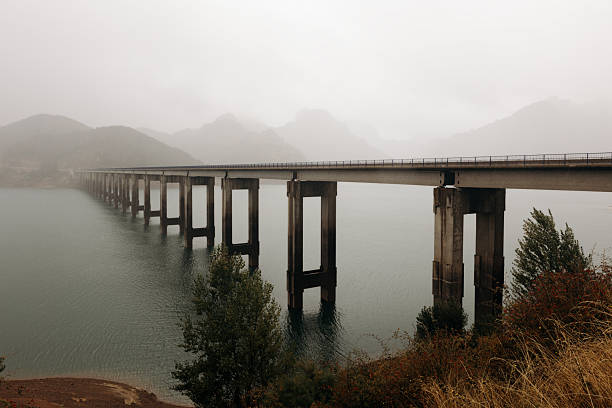
We cannot talk about being on the bridge without talking about the structure itself. The Oresund Bridge is an engineering marvel, a combined railway and motorway bridge across the Oresund strait between Sweden and Denmark.
Before the show, it was just a way to get to work. After the show, it became a tourist destination. People book “Bridge Tours” just to drive across it and listen to the soundtrack.
But for the locals, the bridge represents a complex reality. It symbolizes the close yet sometimes strained relationship between the Swedes and the Danes. It’s about the commuter lifestyle, the economic flow, and the stark reality of border controls that were reintroduced during the refugee crisis and the pandemic.
The show captured this geopolitical tension perfectly. The bridge is a gateway, but it’s also a chokepoint. It can be closed. It can be controlled. It is a symbol of freedom that can instantly become a cage.
The “Saga Norén” Effect
You cannot discuss this topic without dedicating space to Sofia Helin’s portrayal of Saga Norén.
In 2025, neurodivergent representation in media is much more common. But when The Bridge premiered, Saga was a revelation. She wasn’t labeled explicitly in the show, but her traits—literal interpretation of language, difficulty with social cues, intense focus, and sensory sensitivities—resonated deeply with the autistic community.
She wasn’t a superhero with “powers.” She was a brilliant detective who struggled to understand why people lie about small things.
Her evolution across the four seasons is the heart of the story. She learns. She adapts. She doesn’t “cure” herself, but she learns to build her own bridges to other people. Her relationship with Henrik in the later seasons is one of the most tender, non-traditional romances in television history.
Remakes and Adaptations: The Bridge Goes Global
The concept of a body found on a border bridge was so potent that it was remade all over the world.
- The Tunnel (UK/France): A body found in the Channel Tunnel.
- The Bridge (USA/Mexico): A body found on the Bridge of the Americas between El Paso and Juarez.
- The Bridge (Russia/Estonia): Set on the border crossing between Narva and Ivangorod.
- The Bridge (Malaysia/Singapore): A body on the Tuas Second Link.
Each remake took the core premise—being on the bridge—and adapted it to their specific local politics.
The US/Mexico version, for example, dealt with cartel violence and immigration issues that simply don’t exist in Scandinavia. This proves the versatility of the metaphor. Every border has tension. Every bridge has a story.
However, most critics agree: nothing beats the original. The chemistry between Kim Bodnia (Martin) and Sofia Helin (Saga), and later Thure Lindhardt (Henrik), created a magic that is hard to replicate.
Analyzing the “Nordic Noir” Legacy in 2025
So, where does the genre stand today?
Nordic Noir paved the way for the current obsession with true crime and dark, atmospheric dramas. Shows like Mare of Easttown or True Detective share DNA with The Bridge. They focus on flawed detectives in bleak landscapes.
But there is a fatigue setting in. Audiences in 2025 are becoming savvy to the tropes. The “dead girl found in the woods” cliché is worn out.
What makes The Bridge endure is that it wasn’t just about the dead body. It was about the living. It was about the politics of the police force, the broken social contracts, and the desperate need for connection in a cold world.
If you are a writer or a creator looking to capture this vibe, remember: the setting matters. The bridge wasn’t just a backdrop; it was an obstacle. It was a connector. It was the third main character.
FAQs
Q1: Is the bridge in the show a real place I can visit?
A: Yes! The Oresund Bridge is very real. You can drive across it or take the train. It connects Copenhagen, Denmark, and Malmö, Sweden. However, you cannot stop your car in the middle of it to take photos like they do in the show—that is highly illegal and dangerous!
Q2: Why did Martin leave The Bridge after Season 2?
A: The actor, Kim Bodnia, left the show due to creative differences with the writers regarding his character’s arc, and also cited concerns about anti-semitism in Malmö at the time, which made him uncomfortable filming there. This forced the writers to “soft reboot” the show for Season 3, introducing Henrik as the new partner.
Q3: In which order should I watch the remakes of The Bridge?
A: Start with the original Swedish/Danish version (Bron/Broen). It is the gold standard. After that, The Tunnel (UK/France) is generally considered the strongest adaptation, capturing the tone well while adding its own flavor. The US version is good but deviates significantly in the second season.
Q4: Is there a book that continues the story of Saga Norén?
A: Not officially. While there are tie-in novels, the story of Saga Norén effectively ended with the Season 4 finale. The creators have stated they have no plans to bring it back, believing the story has been told completely. This finality is part of why the legacy remains so strong it didn’t overstay its welcome.
Conclusion
On the bridge is to be in a state of transition. It is the terrifying thrill of the unknown.In 2025, we are still looking for stories that challenge us, that make us look at the borders both physical and emotional that divide us. The Bridge did that better than almost anything else. It showed us that even in the coldest, greyest climates, there is warmth to be found if you are brave enough to reach across the divide.
CLICK HERE FOR MORE BLOG POSTS